Sep 24, 2026Guides
What Is a Zip-Track (Zipper-Guided) Windproof Roller Blind and How Does It Stop Wind?
How a zip-track windproof roller blind works: welded zipper teeth locked in aluminium side tracks, why the fabric cannot blow out, and when to retract it.
A zip-track windproof roller blind is an exterior screening system engineered with heavy-duty zipper teeth high-frequency welded to both fabric edges, which continuously lock inside extruded aluminium side tracks to seal perimeter gaps, prevent fabric blowout, and maintain panel tension under turbulent outdoor conditions.
In modern residential architecture and commercial outdoor spaces, exterior areas such as balconies, verandas, courtyards, and restaurant dining patios face constant exposure to unpredictable weather. Traditional outdoor window coverings typically rely on gravity drop systems or stainless steel wire cables to guide the fabric vertically. However, when lateral crosswinds blow across a facade, standard blinds billow, rattle loudly against posts, flap uncontrollably, and frequently pull loose from their mountings.
By contrast, a zip-track blind—also known within the architectural shading industry as a zipper-guided roller blind or side-channel windproof blind—replaces loose fabric edges with an interlocked, captive track system. Instead of leaving the sides of the screen unconstrained, the system mechanically captures both vertical edges along the full height of the opening. This mechanical interlock transforms a flexible fabric panel into a taut, stable exterior facade barrier capable of withstanding demanding outdoor wind loads.
How Do Zipper Teeth and Aluminium Side Tracks Interlock?
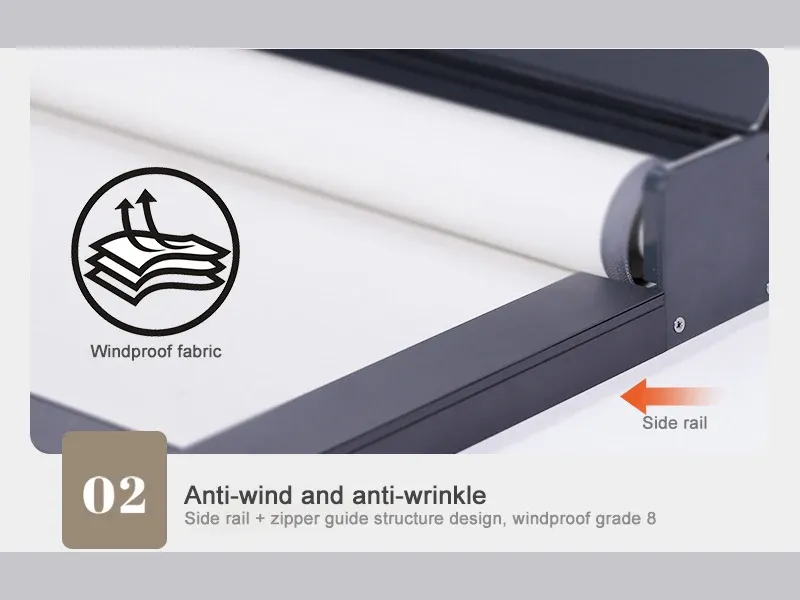
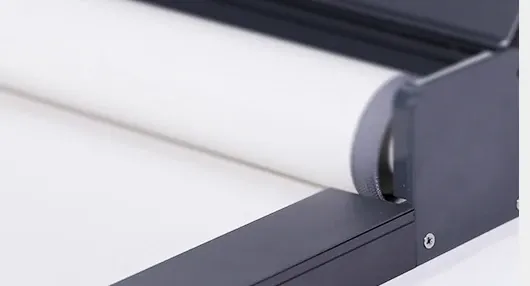
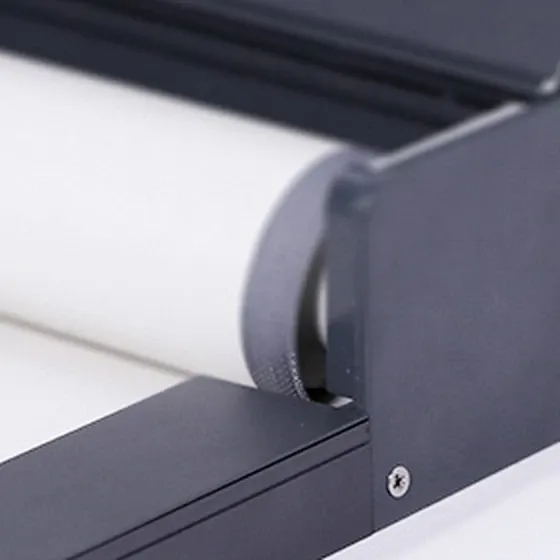
Side-profile assembly showing the fabric roll, welded zipper edge, and extruded aluminium side rail channel.
To understand how a zip-track blind stops wind infiltration and resists blowout, one must examine the physical interaction between the edge-welded zipper teeth and the profile geometry of the extruded aluminium side rail. Unlike lightweight indoor shades, an exterior zip-track system is an engineered structural assembly consisting of a top cassette headbox, an internal roller tube, a weighted bottom rail, an exterior-grade composite fabric screen, and two precision-extruded aluminium side channels.
How Are Zipper Teeth Attached to the Fabric Edges?
The mechanical integrity of the entire system depends directly on how the zipper bead is bonded to the screen panel. In eziptrack systems, the heavy-duty zipper teeth are not sewn or stitched to the screen with conventional thread.
Traditional needle stitching creates thousands of microscopic perforations along the perimeter of the screen. In an exterior environment, cyclical wind friction, UV solar exposure, and moisture ingress quickly degrade sewing threads, causing needle holes to elongate and eventually tear under tensile load.
Instead, the zipper tape is permanently bonded to the screen edges using a high-frequency thermal welding process. The fabric substrate is an exterior composite composed of 30% Polyester and 70% PVC, featuring a nominal surface density of 565 g/m² (±5%) and a thickness of 0.70 mm (±5%). During the thermal welding cycle, the PVC coating of the composite screen melts and fuses at a molecular level with the flexible polymer base of the zipper tape under controlled pressure.
This weld delivers high structural cohesion. The resulting screen provides a warp tear strength of ≥2650 N/5cm and a weft tear strength of ≥2450 N/5cm. Under continuous wind buffeting, the welded edge distributes shear stresses uniformly along the vertical axis without risk of stitch rupture, seam delamination, or edge fraying.
How Do Aluminium Side Tracks Constrain the Fabric?
Once the continuous zipper teeth are permanently welded to both sides of the fabric panel, they are inserted into specially profiled aluminium side tracks secured directly to the structural jambs or facade mullions.
The extruded aluminium channel features an internal chamber engineered with a restricted throat profile:
- The internal chamber accommodates the expanded cross-sectional bead formed by the welded zipper teeth.
- The throat opening of the aluminium profile is narrower than the overall thickness of the zipper teeth, yet wide enough to allow the 0.70 mm composite fabric to travel vertically without abrasive friction.
- Inside the aluminium profile, a guide channel cushions travel and keeps the fabric moving smoothly during rolling cycles.
Because the physical diameter of the zipper teeth is larger than the retaining throat of the aluminium channel, the zipper cannot be pulled through the slot horizontally. The fabric remains locked into the track from top to bottom, sealing the vertical perimeter and eliminating the gaps where wind and rain typically penetrate.
Why Does the Fabric Resist Flapping, Wrinkling, and Track Pullout?
When turbulent outdoor wind strikes a conventional outdoor blind, positive wind pressure pushes against the windward face while negative suction pulls on the leeward face. Because standard blinds have unconstrained sides, this aerodynamic pressure pushes the screen inward or outward, creating a large belly curve that jerks the bottom rail and causes loud, repetitive slapping against adjacent structural columns.
In a zip-track system, applied wind loads are distributed through a completely different physical mechanism:
- Conversion of Outward Force to Lateral Tension: As wind pushes against the face of the fabric panel, the screen attempts to deflect. Because both vertical edges are securely locked inside the side tracks, this outward deflection is immediately converted into uniform horizontal tension pulling inward toward the side jambs.
- Linear Load Dispersion: Instead of concentrating mechanical stress at individual eyelets, corner brackets, or bottom hold-down clips, the continuous column of interlocked zipper teeth disperses the wind load evenly down the entire length of the extruded aluminium channel.
- Dual-Axis Panel Tension: While the welded zipper tracks maintain constant lateral tension across the horizontal span, a heavy extruded bottom rail pulls the panel downward by gravity. This bi-directional tension keeps the screen taut, smooth, and wrinkle-free across its entire surface area.
- Positive Blowout Resistance: Under elevated wind pressure, the zipper teeth press firmly against the interior shoulders of the aluminium profile. As long as the side tracks remain securely anchored into the building substrate, the screen cannot blow out or dislodge from its tracks.
Close-up view of mechanical zipper teeth interlocked within the extruded aluminium side track profile.
Zip-Track vs. Cable-Guided vs. Standard Drop Blinds: How Do They Differ?
When exterior shading contractors, architects, and facade distributors specify outdoor screening products, they generally evaluate three distinct configurations: standard free-hanging drop blinds, cable-guided systems, and zip-track side-channel blinds. Understanding the mechanical differences between these systems is essential for matching product capability to site conditions:
- Standard Free-Hanging Drop Blinds (Unsealed Edge):
- Edge Retention Mechanism: None. The fabric panel hangs freely from the overhead roller tube down to an unsecured bottom bar.
- Perimeter Sealing: Unsealed. Significant perimeter gaps remain open on both sides of the screen.
- Wind Performance: Highly vulnerable to air movement. Even light breezes cause the fabric to billow, flap noisily against walls, and twist around the roller.
- Application Boundary: Limited to fully enclosed interior courtyards or sheltered exterior niches with zero direct wind exposure.
- Stainless Steel Cable-Guided Blinds (Tensioned Wire Edge):
- Edge Retention Mechanism: Vertical stainless steel wire cables pass through guide eyelets attached to the outer ends of the bottom bar.
- Perimeter Sealing: Partial guide only. While the tensioned cables prevent the bottom bar from swinging wildly away from the facade, the vertical fabric edges remain completely loose.
- Wind Performance: In moderate winds, air pressure easily pushes through the open side gaps. The fabric billows between the wire cables, generating audible flapping along the unsupported vertical edges.
- Application Boundary: Specified primarily on architectural facades where side mounting posts are absent, but unsuitable for projects requiring an airtight or windproof perimeter seal.
- Zip-Track (Zipper-Guided) Side-Channel Blinds (Full Perimeter Lock):
- Edge Retention Mechanism: Continuous mechanical interlock. High-frequency welded zipper teeth slide within heavy-duty extruded aluminium side tracks.
- Perimeter Sealing: Fully sealed. The vertical guide tracks seal directly against the structural jambs, eliminating side gaps, wind draft bypass, and driving rain intrusion.
- Wind Performance: Eliminates flapping and rattling. Wind pressure is evenly distributed into the side tracks, maintaining a rigid, drum-tight panel without track pullout.
- Application Boundary: Engineered specifically for exposed residential balconies, pergolas, gazebos, commercial restaurant patios, and high-span openings where reliable weather containment is required. (For comprehensive structural details, review our engineered product features).
What Does "Windproof" Actually Mean? Practical Performance and Honest Boundaries
Within the exterior building envelope and fenestration industry, the term "windproof" must always be interpreted with clear engineering context. Flexible fabric shading systems, regardless of engineering precision, operate within defined physical boundaries. Understanding these performance thresholds ensures long-term operational success and structural safety.
Understanding Manufacturer-Rated Grade 8 and Grade 10 Classifications
eziptrack systems carry manufacturer-rated wind resistance classifications: Grade 8 for the motorized models and Grade 10 for the manual models. This rating is a manufacturer-stated benchmark reflecting the structural stability of the extruded aluminium track profiles, the shear strength of the welded zipper bead, and the retention capability of the complete assembly.
It is important to emphasize that this is a manufacturer-stated figure. No third-party wind-pressure test report accompanies it, so for a project that needs certified wind-load data, request the test documentation from the supplier.
Material Specifications Supporting Wind Load Resistance
The system's ability to resist wind pressures without tearing or deforming relies on documented physical material properties:
- Heavy-Duty Composite Construction: Fabric woven from 30% high-tenacity Polyester core filaments encapsulated within 70% protective PVC exterior coating.
- Mass and Dimensional Stability: A nominal fabric mass of 565 g/m² (±5%) and a thickness of 0.70 mm (±5%), providing substantial resistance to stretching and thermal warping.
- High Tear Strength: Minimum warp tear strength of ≥2650 N/5cm and weft tear strength of ≥2450 N/5cm (manufacturer-stated), preventing localized shear tears along the zipper welding boundary.
- International Flame Retardancy: Fully compliant with rigorous global fire safety standards, including NFPA 701-2015 TM#2, BS 5867 Part 2 Type B, and DIN 4102-1 B1.
- Colour Fastness: Rated at ISO 105 B02 Grade 8, a measure of how little the fabric colour shifts under prolonged light exposure.
Operational Boundaries: When to Retract the Screen
A zip-track roller blind is engineered to expand functional living space by providing reliable protection against everyday seasonal winds, solar glare, light driving rain, and outdoor insects. However, flexible outdoor screens are not intended to serve as permanent storm shutters during violent weather events.
During severe weather warnings, gale-force winds, typhoons, or severe atmospheric squalls, standard operating procedure mandates that all exterior zip-track screens be fully retracted into their protective cassette headboxes. Rolling the fabric away under extreme weather conditions shields the composite textile and the building substrate anchors from catastrophic dynamic structural loads.
Where Are Zip-Track Roller Blinds Typically Specified?
Because zip-track systems provide a structural perimeter seal, they are widely specified across residential, hospitality, and commercial building projects:
- High-Rise and Multi-Story Residential Balconies: Higher elevations experience accelerated wind velocities due to urban wind-tunnel effects. Zip-track blinds seal open balcony apertures, preventing strong drafts from entering adjacent living rooms while keeping outdoor furniture clean and dry.
- Pergolas, Gazebos, and Garden Pavilions: Freestanding aluminium or timber pergolas are popular features in contemporary exterior design. Adding zipper-guided side screens encloses the structure on demand, converting open pergolas into three-season or four-season semi-indoor living lounges.
- Hospitality Terraces and Outdoor Dining Patios: For bistros, cafes, and hotel rooftop lounges, inclement weather directly threatens guest capacity and daily revenue. Zip-track screens allow hospitality managers to lower windbreaks instantly when evening winds pick up, protecting patrons from chilling breezes without obstructing scenic views.
- Residential Patios and Verandas: Ground-level outdoor living rooms benefit from perimeter-sealed shades that block solar radiation, eliminate dust infiltration, and maintain privacy without sacrificing natural airflow.
- Expansive Building Facades and Window Reveals: Large glass window walls and sliding patio doors require external solar shading that spans wide structural bays without intermediate support cables.
When specifying outdoor screens for these diverse applications, choosing the right balance between outward visibility, glare control, and privacy is critical. Review our detailed openness rate guide to evaluate how different fabric weave densities perform across various exterior exposures.
What Must B2B Buyers and Contractors Verify Before Sourcing or Stocking?
For exterior blind distributors, architectural contractors, and project specifiers, procuring and stocking zip-track systems requires careful evaluation of four key technical parameters:
1. Structural Opening Dimensions and Substrate Mounting
Precision measurement is the first prerequisite for any side-channel blind installation. Because the zipper teeth must glide through the aluminium side tracks without binding, the two vertical tracks must be installed strictly plumb and parallel. Contractors must verify whether mounting surfaces (concrete, structural steel posts, or timber framing) provide sufficient structural depth to support the cassette headbox and handle dynamic lateral wind loads transferred through the side tracks. Comprehensive mounting clearances and structural preparation guidelines can be reviewed in our installation documentation.
2. Motorized vs. Manual Operating Configurations
Project planners should match the blind operating mechanism to the functional requirements of the site. eziptrack manufactures a complete range of 8 distinct models:
- Motorized Systems: Models ZT90, ZT110, ZT150, ZT170, and ZT180 feature integrated internal tubular motors engineered for smooth, automated deployment. These units support multi-channel handheld remote controls and Wi-Fi (TUYA) smart app connectivity, allowing users to integrate screens into smart building platforms or control blinds via smartphone. A specialized Double Layer motorized configuration is also available for dual-function installations requiring two separate fabric layers within a single footprint.
- Manual Systems: For remote outdoor structures, off-grid locations, or projects where electrical wiring is impractical, eziptrack offers the Hand Crank system featuring a smooth internal reduction gearbox, as well as the Cordless Spring balanced system for intuitive manual adjustment.
- Explore structural casing dimensions and full engineering specifications across all 8 configurations in our products overview.
3. Fabric Roll Widths and Seam Elimination
To preserve an unobstructed architectural sightline and maintain balanced surface tension, exterior screens should ideally be fabricated from a single continuous piece of fabric without horizontal welding seams. eziptrack supplies standard fabric rolls in four distinct widths: 200 cm, 250 cm, 300 cm, and 320 cm. Sourcing the appropriate roll width allows fabricators and project contractors to match project opening dimensions efficiently, minimizing fabric scrap while avoiding visible horizontal seams across the primary viewing plane.
4. Fabric Openness Factor and Documentation Verification
Project submittals typically require formal verification of fire retardancy ratings (NFPA 701, BS 5867, DIN 4102-1 B1) and color fastness documentation (ISO 105 B02 Grade 8). For project planning and client presentations, the colour card PDF can be downloaded from our colour card page. Where physical color matching is required for contract sign-off, tangible sample swatch binders can be ordered through our export department upon request.
Frequently Asked Questions (FAQ)
How does a zip-track blind prevent fabric from blowing out of the tracks in heavy wind?
The fabric panel features continuous heavy-duty zipper teeth high-frequency welded to both outer vertical edges. These zipper teeth slide inside an extruded aluminium side track engineered with an internal retention chamber and a narrow neck opening. Because the diameter of the zipper teeth is thicker than the neck opening of the aluminium track, the fabric is trapped inside the profile. Under wind pressure, the screen converts outward force into lateral tension, preventing the edge from pulling free of the track.
Can zip-track roller blinds be operated manually, or do they require electric motors?
Zip-track roller blinds can be configured with either motorized or manual drive mechanisms. Motorized versions utilize internal tubular motors compatible with handheld multi-channel remotes and Wi-Fi (TUYA) smart building integration. For installations without accessible power connections, manual options include a smooth hand crank reduction gearbox or a balanced cordless spring mechanism.
What fabric roll widths are available to cover wide architectural openings?
eziptrack composite screen fabric is manufactured in four standard roll widths: 200 cm, 250 cm, 300 cm, and 320 cm. Specifying the appropriate roll width allows fabricators and contractors to build large-format outdoor blinds without introducing horizontal fabric seams across the viewing area.
When should zip-track outdoor blinds be retracted during severe weather?
Although zip-track blinds carry manufacturer-rated wind resistance classifications, Grade 8 for motorized and Grade 10 for manual, for everyday outdoor use, standard operational guidelines require retracting the screens fully into their cassette headboxes during severe gales, tropical storms, typhoons, or localized squalls to protect both the shading assembly and the host building structure from extreme structural loads.
How do I stop an outdoor roller blind from flapping in the wind?
Replace a loose-hanging blind or a cable-guided system with a zipper-guided track blind. Welded zipper teeth run continuously inside extruded aluminium side tracks and lock both fabric edges along the full drop, so lateral wind pressure is taken up as tension across the fabric instead of making it flap. The manufacturer states wind resistance of grade 10 on manual models and grade 8 on motorized models.
Can a zip screen blind be mounted directly to an outdoor pergola?
Yes. The aluminium side tracks are fixed vertically to the pergola posts and the welded zipper edges run inside them, so the screen stays taut between the posts. Openings from a single pergola bay up to 14 m wide can be covered depending on the model, and manual versions need no power supply at the structure.
What sizes can a windproof roller blind be made in?
Sizes depend on the model. Motorized ZT150 covers 0.85-5 m wide with drops up to 5 m; the large ZT180 spans up to 14 m wide and 7 m high. The manual Hand Crank model covers 500-4000 mm wide and 1500-3000 mm high, and the Cordless Spring covers 1200-4000 mm wide and 0-3000 mm high.
Conclusion
By replacing loose fabric edges with an engineered zipper-and-channel mechanical interlock, a zip-track windproof roller blind solves the fundamental weaknesses of traditional outdoor window coverings: flapping, perimeter drafts, and fabric blowout. The synergy of high-frequency welded zipper teeth, precision-extruded aluminium side channels, and high-tensile composite fabric provides a stable, drum-tight exterior screen that extends the comfort and usability of residential balconies, garden pergolas, and commercial outdoor dining patios.
Whether you are a shading distributor expanding your product inventory or a facade contractor planning a custom commercial enclosure, specifying properly engineered zipper-guided hardware ensures long-term durability and architectural performance.
To request detailed technical specification sheets, CAD mounting drawings, or wholesale export pricing for our complete line of motorized and manual zip-track systems, submit your project inquiry directly through our contact us portal to consult with the eziptrack engineering export team in Guangzhou.